 Dupey Consulting
SERVICE / SYSTEMS & AUTOMATION
CRM & Salesforce
A CRM THAT MATCHES HOW YOU SELL
Some teams inherited years of conflicting automation and fields nobody remembers. Others adopted Salesforce because the industry expects it, and nobody set it up for how they actually sell. In both cases the team works around the CRM instead of through it.
You can hire this on its own. You do not need a website or a separate automation project to start. Salesforce is where my deepest CRM experience sits.
Based in the Chippewa Valley. I work with businesses near and far.
- Platform focus
- Salesforce - the CRM I work in day to day
- Typical timeline
- One week for focused cleanup; four to eight weeks for a full audit
- Cost
- Written into the scope before work starts
WHAT THIS SOLVES
A CRM the team will use, instead of a spreadsheet they trust more.
Auditing the org, cleaning up dead automation, simplifying stages and fields, improving reporting, and building only the logic that matches how you sell. A fit if people keep the real pipeline elsewhere, or Salesforce was never configured for the business you actually run.
WHAT I CAN HELP WITH
CRM consulting with strong Salesforce capability.
Organization and process cleanup
Read what's firing - Flows, leftover Process Builders, validation, Apex, the data model - then delete what fights the team before adding anything new.
Stages, fields, and data quality
Custom objects that should be fields. Picklists that grew to fifty values. Record types that exist because someone thought they should. The model is the foundation everything else sits on.
Workflows, lead routing, and handoffs
New inquiries land on the right person, duplicates don't multiply, and marketing attribution survives the trip into the CRM.
Reporting and Salesforce automation
When new logic is the right call: Flows for what Flows handle well, Apex when it genuinely needs it, simple Lightning work when the UI warrants it. Most requests can stay in Flow if they're scoped right.
Integrations and marketing tools in Salesforce
Wiring Salesforce to another product when Salesforce is the hub, plus Pardot / Account Engagement when marketing automation lives in the same org.
Connecting Salesforce to another system is often Automation - you can hire that on its own. Ongoing admin is possible later if it makes sense; it is not a requirement of the first engagement.
START A PROJECT →WHAT THE WORK LOOKS LIKE
Prune as aggressively as you plant.
See what actually runs
Most orgs have automation turned on that does nothing useful - leftovers from abandoned projects. The first round is usually subtraction. Half the new automation requests I get are solved by deleting old automation rather than adding new.
Build only what matches how you sell
New Flows, Apex, and simple Lightning work when the built-in tools can't do the job safely. I won't bolt on AI features as a default move - some earn their keep, most add surface area to maintain.
Salesforce-connected tools
When the work is wiring Salesforce to another product - lead capture, documents, meeting packets - that's often an integration. I can do that here when Salesforce is the hub, or as a separate Automation engagement.
I'm Salesforce-certified and Salesforce-focused - not a multi-CRM consultant. If you're on HubSpot, Zoho, or something else, I'll say so up front rather than pretend otherwise.
NOT THIS
- Salesforce implementations from zero - a new org standup is a larger project that benefits from an implementation partner.
- Salesforce CPQ and Revenue Cloud at scale - specialist lanes.
- Heavy custom Lightning Web Component development at agency complexity - happy to build simple ones.
- Other CRMs (HubSpot, Zoho, and similar).
SELECTED PROOF
The kind of work this service produces.
01SALESFORCE
WhatConverts → Salesforce
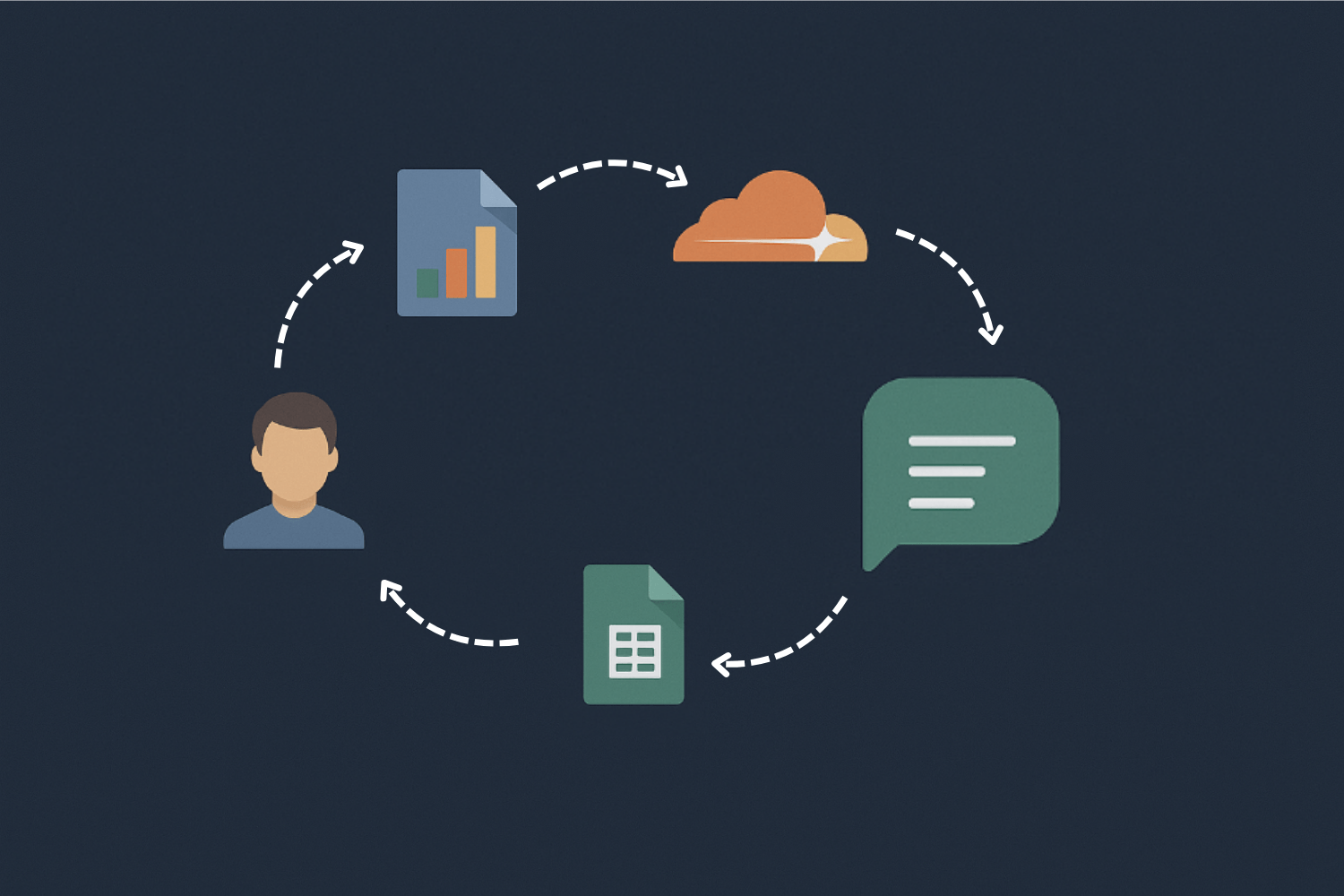
Paid leads were sitting in one tool while sales waited on manual CRM entry. Built a pipeline so new leads land in Salesforce in seconds, ready to call.
02MARKETING CLOUD
SMS in Salesforce Marketing Cloud
The engagement series could email and assign tasks, but not text. Built an SMS step in that series, sent through MyRepChat.
03SALESFORCE WORKFLOW
Meeting Prep Automation
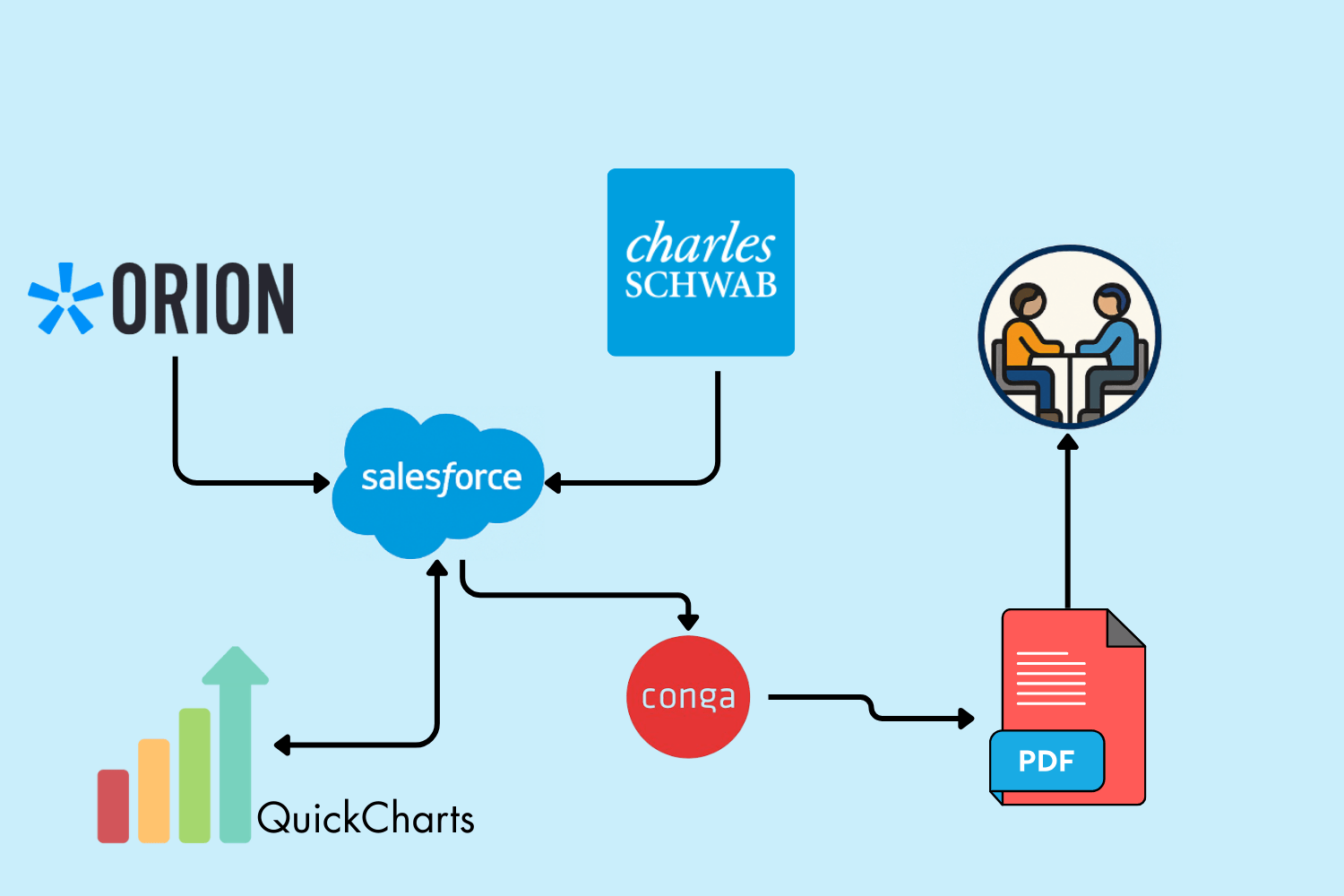
Advisors pulled client, portfolio, and custodial data by hand before meetings. Built a Salesforce-triggered workflow that assembles a formatted PDF before they sit down.
HOW AN ENGAGEMENT STARTS
A clear scope before the work starts.
Tell me what needs solving. Then it's built, launched, and supported.
- 01TELL ME WHAT YOU NEED
- 02GET A CLEAR SCOPE
- 03BUILD + LAUNCH
After launch, Website Management is available if you want ongoing website support - optional, not required.
QUESTIONS
A few things people ask before they start.
Can I hire CRM help without an automation project?
Yes. Salesforce cleanup or setup is a complete engagement. Connecting Salesforce to another tool is available separately if you need it - it is not a requirement.
Do you work in other CRMs besides Salesforce?
No - my CRM consulting is Salesforce-focused. If you're on HubSpot, Zoho, or something else, I'll say so up front rather than pretend otherwise.
We're a smaller business on Salesforce - is this overkill?
Not if Salesforce is already where you keep customers and deals. The work is making it match how you actually sell - cleaning up clutter, fixing handoffs, and stopping spreadsheet workarounds. I won't sell you enterprise complexity you don't need.
Our Salesforce is a mess - can you still help?
That's the norm. We triage: see what runs, turn off what fights the team, simplify stages and fields, then rebuild only what matches how you want to sell.
Can you help with marketing email tied to Salesforce?
Yes when that lives in Salesforce (including Pardot / Account Engagement) - lists, scoring, and clean handoffs to sales.
IS SALESFORCE FIGHTING THE TEAM?
Tell me what the CRM is supposed to do.
You'll get a written scope - what's in, what's out, timeline, and cost - before anything gets changed in the org.